Traveling While Human: Transport for Every Stage of Life
Travel advice is often written for a generic "traveler"—an able-bodied, unencumbered adult with moderate patience and a flexible budget. But that person doesn't really exist. We are all specific people with specific constraints, and those constraints dictate our relationship with transportation.
A flight of stairs is a non-issue for a 20-year-old with a backpack. For a parent with a stroller, it is a fortress wall. For a traveler with bad knees, it is a painful obstacle. When we evaluate transit options, we need to look past the price and speed and look at the human factors.
The Family Unit: Logistics as Love Language
Traveling with children changes the physics of movement. Speed becomes secondary to containment. A train is great because you can walk a crying baby up and down the aisle. A car is great because you can stop for emergency bathroom breaks.
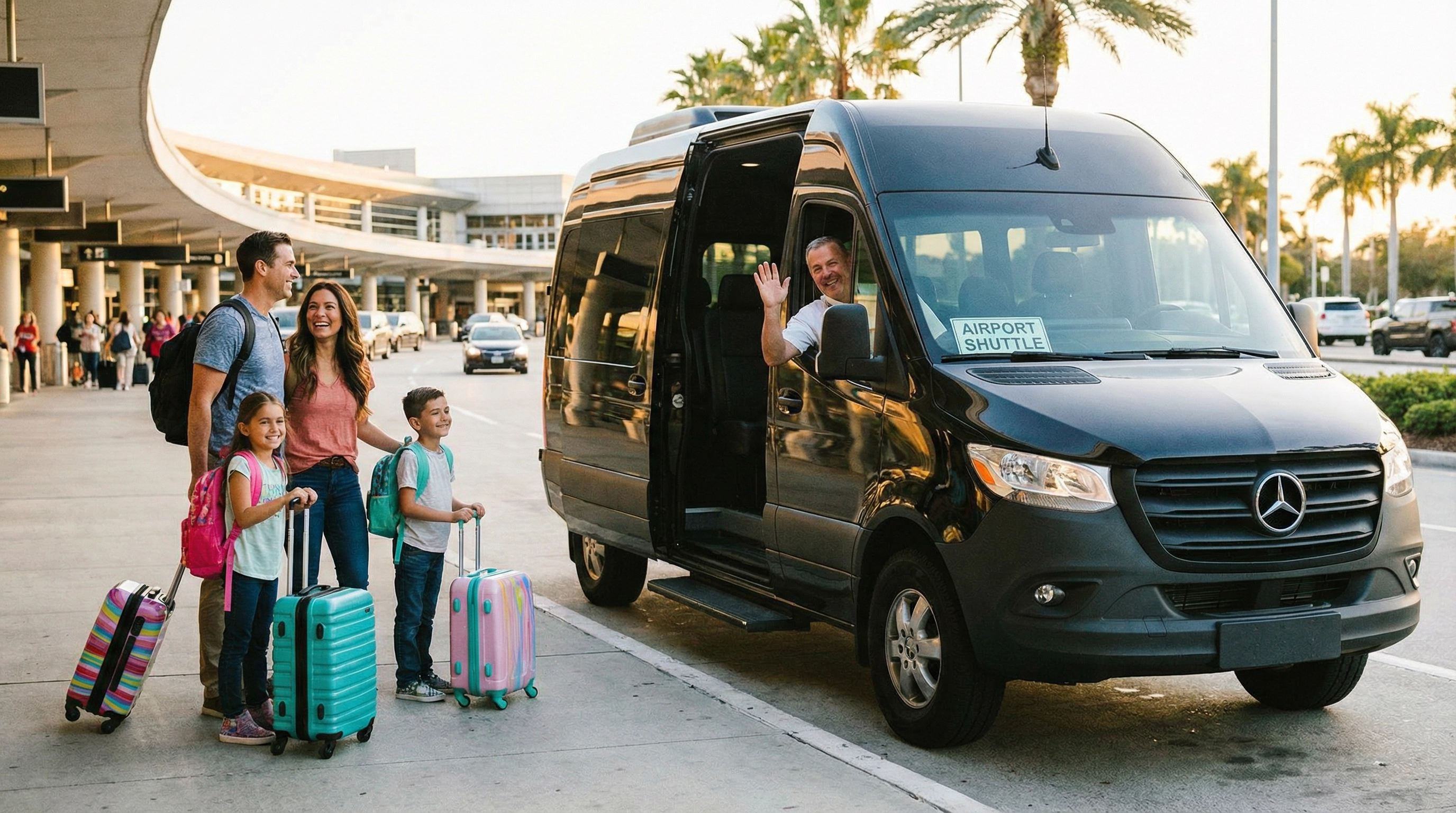
But the transitions are the killer. Getting a family of four, plus luggage, plus a stroller, from an airport gate to a train platform is a military operation. This is where the "door-to-door" value of a private transfer skyrockets. It’s not about luxury; it’s about preserving parental sanity. The driver meeting you at arrivals isn't just a chauffeur; they are an extra pair of hands and a guarantee that you won't lose a child in the crowd.
The Solo Adventurer: Vulnerability and Agility
The solo traveler has the ultimate agility. You can squeeze onto a crowded bus, hop on the back of a moto-taxi, or walk five miles because you feel like it. But you also carry the full weight of vigilance. There is no one to watch your bag while you buy a ticket. There is no one to navigate while you drive.
For the solo traveler, connectivity is safety. A rental car with a dead phone battery in a remote area is a different level of risk when you are alone. This is why solo travelers often gravitate towards shared spaces—trains, buses, hostels—where there is safety in numbers, even if those numbers are strangers.

The Senior Traveler: Comfort is Capability
As we age, our tolerance for friction decreases. It’s not just about physical mobility; it’s about patience for inefficiency. Standing for an hour on a hot bus is an adventure at 22; it’s a health risk at 72.
For older travelers, predictability is the most valuable currency. Knowing exactly where the driver will be, knowing the car has air conditioning, knowing there are no surprise stairs—this allows them to travel with confidence. It extends the range of the world that is accessible to them.
The Business Traveler: Time is the Only Asset
For the business traveler, transportation is a productivity tool. The train is an office. The car is a conference call booth. The priority is continuity. Can I stay online? Is it quiet? Will I arrive unruffled?
They are the masters of the "last mile." They know that the fast train is only fast if the connection to the hotel is seamless. They are the ones who book the car service not to show off, but to ensure they can finish the presentation before the meeting starts.
Know Your Context
When you read a review that says "the bus is easy," ask: Easy for whom? When someone says "driving is stressful," ask: Stressful for whom?
Your context matters. Don't apologize for needing more comfort, and don't feel pressured to spend money on convenience you don't value. The "best" way to travel is the way that allows you—with your specific body, companions, and needs—to arrive ready to enjoy the destination.
For a deeper look at how timing affects your experience, read The Sixty-Minute Buffer.